
V-ST Handpiece on the Viora V30 Platform Miami FL
The V-ST handpiece is a non-invasive skin tightening and lifting treatment modality offered on the multi-technology aesthetic platform Viora V30 (sometimes written “V30 (V-ST)” when referring specifically to the combination). The V30 platform integrates radiofrequency (RF), intense pulsed light (IPL) and laser modalities; the V-ST handpiece specifically uses Viora’s proprietary CORE™ multi-channel RF technology to target skin laxity, improve firmness, and reduce the appearance of wrinkles.
Below is a comprehensive overview of the treatment: how it works, indications, procedure, benefits, limitations, safety considerations, and what to expect (including typical results and after-care). The information is derived from official manufacturer materials, clinics offering the procedure, and peer-reviewed literature on RF and multi-modal aesthetic devices.
What is the V-ST Handpiece & V30 Platform?
The V30 Platform
The Viora V30 is a modular, multi-technology aesthetic device designed to give clinics a single platform capable of multiple treatment types (skin tightening, resurfacing, hair removal, vascular/pigmented lesions, body contouring). Key technologies incorporated into the V30 include:
- CORE™ (Channeling Optimized RF Energy) – for radiofrequency heating of dermal/sub-dermal layers.
- SVC™ (Switching, Vacuum & Cooling) – fractional RF modalities in other handpieces.
- PCR™ (PulseConfiguRythm™) – for adjustable pulse durations in IPL and other modes.
Handpieces available on this platform include:
- V-ST — Skin tightening (RF)
- V-FR — Fractional RF resurfacing
- V-IPL — Intense Pulsed Light treatments
- V-Nd:YAG — Laser (1064 nm) for vascular/skin rejuvenation
- V-FORM, V-VR, etc — bodies, intimate/ vaginal rejuvenation, contouring
The V-ST Handpiece
The V-ST handpiece is the component of the V30 platform dedicated to skin tightening and wrinkle reduction via multi-channel RF heating. According to the manufacturer and supplier literature:
- It uses CORE™ technology: three separate RF channels of 0.8 MHz, 1.7 MHz and 2.45 MHz, plus a “4th mode” combining all three channels simultaneously, to deliver volumetric heating across deeper and more superficial layers.
- It also incorporates contact cooling of the skin surface to protect the epidermis and increase patient comfort.)
- The mechanism: RF energy passes through the dermal and sub-dermal tissue, heating the collagen fibres and elastin networks, causing immediate contraction (shrinkage) of fibres plus triggering a longer-term remodeling effect (neocollagenesis and elastin formation).
In sum, the treatment with V-ST on V30 is designed to safely heat targeted skin layers, stimulate collagen/elastin renewal, tighten skin, and improve the appearance of sagging, fine lines, texture and laxity.
Indications & Ideal Candidates
What skin concerns can V-ST address?
The V-ST handpiece is indicated for non-invasive skin tightening across face and body. Specific concerns include:
- Mild to moderate skin laxity: jawline, cheeks, neck, under-chin (“turkey neck”), décolletage.
- Loose or sagging skin post-weight loss, after pregnancy (abdomen, flanks), inner arms, thighs, knees, elbows.
- Fine lines and mild wrinkles due to collagen/elastin degeneration.
Possibly combined treatments for body contouring when used with other handpieces in the same platform.
Who is an ideal candidate?
Ideal patients are those who:
- Exhibit mild to moderate skin laxity rather than severe sagging requiring surgical lift (face/neck) or excision (body).
- Have realistic expectations: understand that results accrue over time (weeks-months) and multiple sessions may be needed.
- Prefer a non-surgical, minimal-downtime alternative to more invasive treatments.
- Are in reasonably good health, with no contraindications (see next section).
- Can commit to maintenance and follow-up sessions if recommended.
Adults with darker skin tones may also be suitable, as RF energy (unlike some lasers) is “colour-blind” (less dependent on pigment absorption) and thus safer across skin types. The supplier literature for the V-ST handpiece indicates suitability for all skin tones.
Contraindications & cautions
As with all aesthetic treatments, there are contraindications and precautions. Some of these include (typical for RF skin-tightening devices):
- Active infection, open wounds or lesions in the treatment area.
- Recent sunburn, tanning, or photosensitising medications.
- Implanted electrical devices (e.g., pacemakers) or metallic implants in the treatment zone (depends on manufacturer guidance).
- Pregnancy (many aesthetic practices avoid RF treatments during pregnancy).
- Severe skin laxity requiring surgical correction may not respond sufficiently.
- Patients prone to poor wound healing, keloids, or with uncontrolled systemic disease.
Clinics should assess each patient individually and discuss risks, benefits and alternatives.
Procedural Overview
Here is a typical step-by-step overview of what to expect during a V-ST treatment session on the V30 platform.
1
Pre-treatment consultation
- Comprehensive evaluation of skin laxity, texture, health status and realistic outcome expectations.
- History of prior treatments (e.g., lasers, injectable treatments, surgery), medications, medical conditions.
- Discussion of whether the patient is a suitable candidate and overview of what RF skin tightening can and cannot achieve.
Pre-treatment instructions may include: avoid sun exposure or aggressive exfoliation in the preceding days, ensure skin is clean, and perhaps hydrate well. Some clinics recommend increased hydration in the weeks leading up to sessions.
2
Preparation for treatment
- The target area is cleaned and optionally a coupling gel may be applied (depends on device/clinic).
- The clinician selects appropriate handpiece (V-ST) and adjusts parameters: RF channel mode (0.8, 1.7, 2.45 MHz or combination), pulse duration, energy level, number of passes, spot size/coverage area. For example one vendor listing for the V-ST handpiece cited mapping of 0.8 MHz, 1.7 MHz, 2.45 MHz or Mode 4 (all three) with energy up to about 130 J/cm³. (rockbottomlasers.com)
- Skin cooling is engaged via the contact cooling tip to protect the epidermis and increase comfort.
3
Treatment delivery
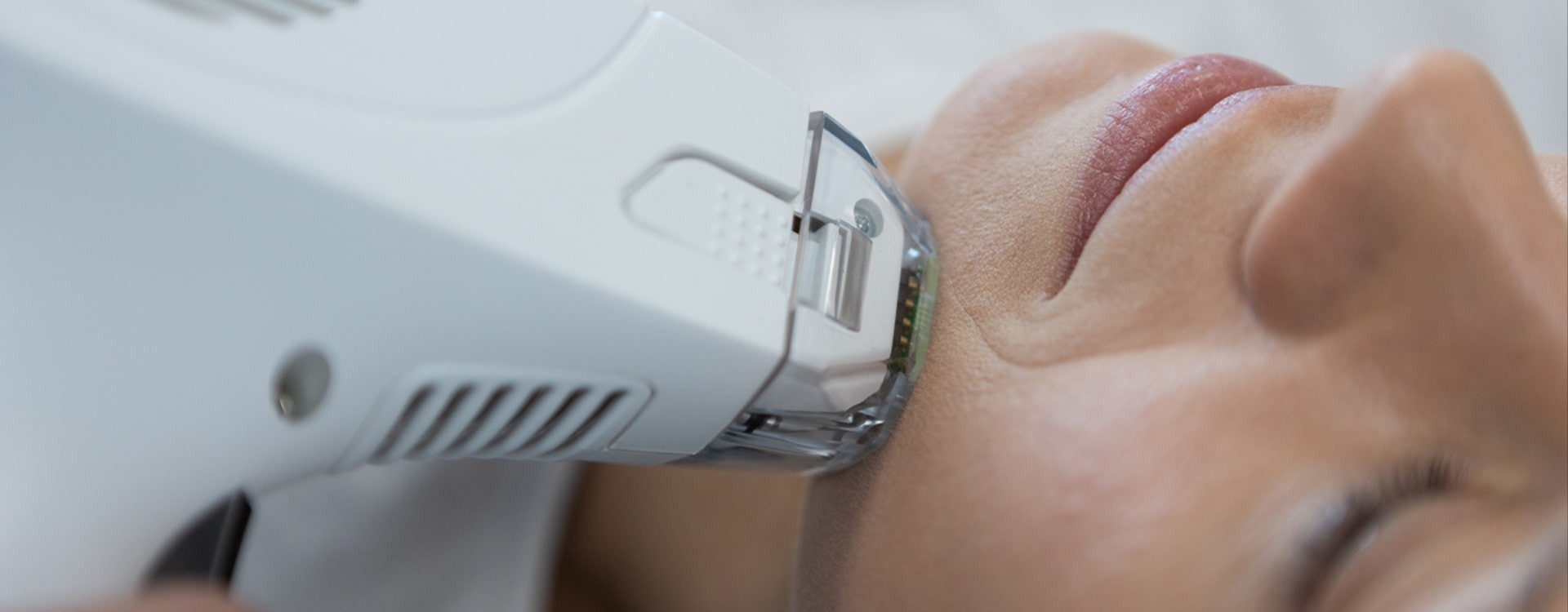
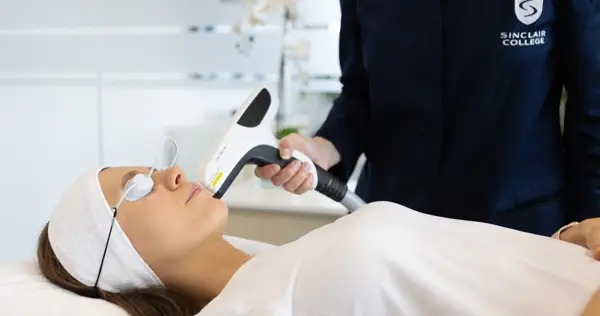
- The handpiece is moved systematically across the treatment area, applying pulses of RF energy.
- Patients typically feel a warming sensation – possibly mild heat and cooling alternations due to the cooling tip. The supplier information for V-ST describes the treatment as “safe and painless, with no downtime” in many cases.
- Each pass may cover the whole treatment area; multiple passes may be done depending on desired depth and skin condition.
- The session length varies depending on area size (face vs body) but often might be 20-45 minutes for typical facial or neck treatment; larger body zones may take longer.
4
Immediate post-treatment
- After completion, the skin may appear slightly flushed or pink due to the RF heating and increased circulation; contact cooling helps minimize discomfort. Some mild swelling is possible for a few hours.
- Patients generally can resume normal activities immediately or within hours. There is minimal downtime.
- Post-treatment instructions: keep skin hydrated, avoid intense sun exposure or tanning, avoid aggressive skincare (strong actives) for a short period, follow any specific instructions from the clinician.
5
Course of treatments & maintenance
- Most clinics recommend a series of treatments rather than a single session for optimal results. For example, one supplier suggests 4-8 sessions (face) every 2 weeks, though exact frequency and total number depends on severity of laxity and treatment area.
- After the initial series, maintenance treatments may be advised (e.g., every 6-12 months) to sustain skin tightening effects, given that natural aging continues.
- Results evolve over time: immediate tightening due to collagen contraction can be felt, but the full remodelling effect occurs over 2-3 months (or more) as new collagen/elastin fibres lay down.
Mechanism of Action – Science & Technology
Radiofrequency heating and tissue response
The V-ST handpiece uses multi-channel RF energy via the CORE™ architecture to heat dermal and sub-dermal tissues. The mechanism is as follows:
- RF energy causes oscillation of charged particles in tissue, generating heat through tissue resistance; the greater the resistance, the more heating.
- Heating causes immediate contraction (shrinkage) of collagen and elastin fibres, which may produce an immediate tightening effect.
- Thermal injury within safe limits triggers a wound-healing cascade: fibroblasts are activated, collagen types I and III are synthesized, elastin network is reinforced, microvascular circulation improves, and connective tissue matrix is remodelled over weeks-months.
- The multi-frequency channels (0.8 MHz, 1.7 MHz, 2.45 MHz) allow different depths of penetration and more tailored heating: lower frequencies penetrate deeper, higher frequencies more superficially, and the combination mode (Mode 4) provides uniform volumetric heating.
- Contact cooling ensures the epidermal surface remains protected, reducing pain and risk of thermal injury at the skin surface; thereby energy can be safely delivered to deeper tissue without damaging the top layer.
Why multi-technology platform adds value
The V30 platform’s capability to incorporate RF (via V-ST), IPL, laser and other handpieces means that clinics can treat multiple indications (not only tightening) from the same machine increasing flexibility and return on investment. For the patient, this means the same device can be used for skin tightening, rejuvenation, hair removal, pigmentation, and even body contouring, allowing more integrated or combined protocols.
Clinical evidence & manufacturer claims
While many independent high-quality randomized trials are limited (as is typical in commercial aesthetic devices), supplier and clinic literature claim that the V-ST handpiece is “clinically proven safe and painless, with no downtime” for facial and body tightening.
Independent literature on RF skin-tightening generally supports the concept: RF devices have been shown to increase dermal thickness, collagen content and reduce laxity in mild-moderate cases. For example, a broad review of RF skin-tightening and RF modalities describes their mechanism and applications.
Benefits & What to Expect
Benefits:
Non-surgical
No incisions, no general anaesthesia, minimal downtime.
Comfortable treatment
Contact cooling and advanced RF channels allow settings that patients tolerate quite well.
Versatile
Face and body can be treated; multiple depth levels allow targeting different areas (jawline, neck, abdomen, arms, knees).
Suitable for many skin types
RF energy is less dependent on pigment than many lasers, so darker skin tones may be safely treated (with appropriate settings and practitioner experience) as indicated by the supplier.
Progressive results
Some immediate effect may be seen (due to collagen contraction), with improvement continuing over weeks-months.
Minimal downtime
Most patients resume normal activities quickly; mild redness or swelling may be present but typically resolves in hours to days.
Typical Patient Experience & Results
Immediate sensation
Warmth, maybe slight tingling; the cooling tip ensures surface comfort.
Immediately post-treatment
Skin may look slightly pink or flushed; some mild swelling may occur.
Short-term (within 1-2 weeks)
Some skin smoothing and mild tightening may be noticed.
Mid-term (4-12 weeks)
Collagen remodelling progresses, skin firming becomes more apparent.
Long-term (after full course, around 3 months or more)
Significant improvement in skin laxity, smoother texture, improved contour, less visible crepiness or fine lines. One supplier notes results may be clearly seen after about 3 months.
Maintenance
To sustain results, periodic follow-up sessions may be advised (varies by individual aging, lifestyle, area treated).
Example treatment areas
- Face: jawline, cheeks, under-chin, micro-lifting of jowls.
- Neck and décolletage: common areas of early laxity.
- Body: abdomen (especially after pregnancy/weight loss), inner arms, thighs (especially medial), knees, elbows — areas prone to sagging or loose skin.
Limitations & Considerations
While V-ST on the V30 platform offers many advantages, it is critical to set realistic expectations and understand limitations:
Not a replacement for surgery:
In cases of severe skin laxity (large amounts of sagging skin, hanging skin pans, very advanced age-related drooping), surgical options (lift, excision) may be more appropriate. RF treatments are best for mild-moderate laxity, early sagging.
Multiple sessions required
Significant results often require 4-8 sessions (or more) depending on area and severity. One supplier indicates face treatments may need 4-8 sessions.
Results are gradual
The full effect may not be seen immediately — remodelling takes weeks to months. Patients should be aware of this.
Maintenance needed
Natural aging continues; without maintenance treatments, results may wane.
Variable individual response
Age, skin thickness, collagen content, prior sun damage, smoking, nutrition, and genetic factors can all influence results. Some patients will respond better than others.
Cost
Multiple sessions add cost; patients should evaluate cost-vs-benefit and compare with alternative options.
Safety & side-effects
While generally safe, there are potential side-effects (see next section). Proper cooling, parameter settings and practitioner experience are key.
Safety, Risks & Side-Effects
According to supplier literature, V-ST treatments are “clinically proven, safe and painless, with no downtime.” However, as with any aesthetic device, potential risks exist and depend on operator skill, skin type, and parameters used. Some of the known considerations include:
Safety Features
- Contact cooling to protect epidermis.
- Multi-channel RF allows tailoring depth and energy to patient/area.
- Manufacturer documentation emphasises that proper training and local regulations must be followed.
- Clinics typically perform test patches and follow safe protocols.
Potential Side-Effects
- Short-lived redness (erythema), mild swelling in treated area – usually resolves within hours to days.
- Temporary tenderness or warmth in the skin.
- Rarely, bruising (if vacuum effect or concomitant suction used).
- Pigment changes (hyper- or hypo-pigmentation) ae rare but possible, especially if sun exposure is not avoided. Although RF is less pigment-dependent than laser, the risk is not zero.
- Thermal injury or burns – extremely rare when device is used properly, but improper parameter settings or poor cooling can increase risk.
- Rarely, worsening of skin laxity if the response is minimal.
- Because RF stimulates heat in deeper tissue, patients with implanted devices (pacemakers, defibrillators) or certain metal implants may not be suitable – always disclosed during consultation.
- Not intended for active infection or open lesions in the treatment area.
- As with any aesthetic treatment, unrealistic expectations or inadequate follow-up may lead to dissatisfaction.
Clinicians should perform full informed-consent, discuss risks, limitations and alternative options, and ensure safe settings and post-treatment care.
Pre- & Post-Treatment Care Guidelines
According to supplier literature, V-ST treatments are “clinically proven, safe and painless, with no downtime.” However, as with any aesthetic device, potential risks exist and depend on operator skill, skin type, and parameters used. Some of the known considerations include:
Pre-Treatment Preparation
- Avoid sun exposure or tanning for at least 1–2 weeks prior.
- Discontinue retinoids, strong exfoliants, acid peels or irritating cosmetics for a few days (typically 3-4 days) prior. One supplier suggests avoiding vitamin A–type actives for at least 3 days.
- Ensure skin is clean and free of makeup for the session.
- Hydration is helpful: some guides recommend drinking 1–1.5 L of water per day for two weeks leading up to treatment to improve skin conductivity.
- Avoid waxing, threading or hair removal in the treatment area for 1–2 weeks prior (as per clinic’s protocol).
- Discuss medical history, medications, any implants or devices.
Post-Treatment Care
- Immediately after: gentle cleansing, apply recommended soothing/soothing gel or cream if provided.
- For the first 24–48 hours: avoid intense heat (saunas/hot tubs), vigorous exercise that causes heavy sweating or rubbing of the treated area.
- Avoid sun exposure; apply broadband sunscreen (SPF 30+) on all treated areas.
- Avoid aggressive exfoliation, chemical peels, retinoids, micro-needling for at least 1–2 weeks (consult your clinician). One supplier recommends no other skin treatments for at least 2-4 weeks.
- Keep skin hydrated. Some clinics suggest continuing increased water intake for the treatment course.
- Use gentle moisturisers and avoid irritating skincare ingredients until skin recovers fully.
- Attend all scheduled follow-up sessions and maintenance as recommended.
Maintenance & Long-Term Plan
- After the initial series of treatments, schedule follow-ups every 6–12 months (or as advised) for maintenance tightening and to combat ongoing ageing/laxity.
- Adopt a good skincare regimen (sun protection, antioxidant serums, retinoids as appropriate) to support the results.
- Healthy lifestyle (non-smoking, good sleep, healthy nutrition) enhances and sustains outcomes.
- In case results plateau or sagging recurs, discuss with your clinician whether further sessions or adjunctive treatments (e.g., RF + microneedling, ultrasound tightening, surgical lift) are indicated.
Clinical Evidence, Documentation & Manufacturer Information
The V-ST and V30 platform have extensive manufacturer documentation and clinical references, though independent peer-reviewed randomized controlled trials specific to the exact handpiece may be less numerous compared to older RF devices. Some relevant points:
- The manufacturer site describes V-ST as “next level skin tightening & wrinkle reduction” using CORE™ technology.
- Suppliers list technical specs (e.g., for V-ST: 8mm × 8mm treatment area, frequencies 0.8/1.7/2.45 MHz or combined, up to ~130 J/cm³) in product description.
- Clinic-oriented articles summarise that the Viora V30 system “gently heats the skin to stimulate collagen production … smoother, more youthful-looking skin” when used with the V-ST handpiece (among others).
- A review of RF skin tightening more broadly affirms that RF devices (non-ablative) are effective in mild-moderate laxity, and work by heating the dermis and stimulating neocollagenesis.
- While not purely aesthetic, the general principle of thermal tissue remodelling (collagen/elastin regeneration) upon RF heating is well-established, giving confidence in mechanism.
From the above, although individual outcome data (e.g., number of patients, percent improvement, duration of effect) for V-ST specifically may not always be fully publicly available, the technology and approach align with accepted practices in non-invasive skin tightening.
Frequently Asked Questions (FAQ)
Number of sessions depends on treatment area, degree of skin laxity, patient age and skin quality. Many clinics recommend 4-8 sessions for the face, spaced about 2 weeks apart, noting that fewer sessions may be needed for milder cases and more for body areas.
Some immediate tightening may be experienced due to collagen contraction, but optimal results typically develop over 2 to 3 months as collagen remodelling occurs. Some literature suggests clear results may appear after approximately three months.
According to manufacturer and supplier documentation, the treatment with V-ST is comfortable and well tolerated, due in large part to the contact-cooling tip and tailored RF parameters. Some warmth during treatment is normal.
Minimal downtime. Patients can usually return to normal activities almost immediately. Some mild swelling or redness may occur and resolve within hours to a day.
Yes — because RF energy is less influenced by melanin than laser or IPL, the manufacturer indicates suitability for all skin types. However, practitioner experience and correct settings are important.
Results vary by individual; typically maintenance sessions are required. Lifestyle, sun exposure, aging rate and treatment compliance affect durability. Without maintenance, gradual laxity may recur over time.
Yes. V-ST on V30 is used not only on the face and neck but also body areas like abdomen post-pregnancy, arms, thighs, knees and elbows. The depth-control capability allows larger areas to be treated.
Side-effects are uncommon and generally mild: redness, warmth, mild swelling. Rare risks include pigment changes or thermal injury if improperly used. Proper patient selection, operator training, and adherence to protocols mitigate risks.
Key Takeaways
- The V-ST handpiece on the Viora V30 platform is a modern, multi-frequency RF device designed for non-invasive skin tightening and wrinkle reduction on face and body.
- The technology (CORE™ multi-channel RF + contact cooling) allows tailored heating of dermal and sub-dermal tissues to stimulate collagen and elastin remodelling.
- Ideal for patients with mild to moderate skin laxity who want non-surgical rejuvenation, with minimal downtime and respectable results.
- Multiple sessions (often 4-8) spaced over weeks are typically needed, and full effect develops over months. Maintenance is advised.
- The treatment is comfortable, safe across many skin types (with appropriate use) and versatile for many treatment zones.
- It’s not a substitute for surgical lift in severe laxity, but for the right patient it offers a compelling aesthetic option.
- As with any aesthetic intervention, realistic expectations, proper consultation, experienced clinician and follow-up care are key to optimizing outcome.
Final Recommendation for Patients
If you are considering the V-ST treatment via the Viora V30 platform, here’s what you should do:
- Schedule a consultation with a qualified aesthetic practitioner experienced in RF skin-tightening.
- Ask to see before-and-after photos specifically for V-ST handpiece on Viora V30 (face/neck and body if relevant).
- Discuss your skin type, laxity level, prior treatments, medical history and expectations.
- Clarify the number of sessions recommended, estimated cost, and maintenance plan.
- Confirm that the clinic uses the V30 platform with V-ST handpiece and has strong comfort/ safety protocols (cooling tip, parameter control, monitoring).
- Understand the limitations: how much improvement you can realistically expect, when you’ll see it, and what happens over time.
- Follow the pre- and post-treatment protocol given by the clinic to maximise safety and results (hydration, sun protection, avoiding strong actives, etc.).