
The technology behind an aesthetic treatment matters just as much as the name of the procedure. Patients often hear terms such as plasma, radiofrequency, laser, resurfacing, fibroblasting, or skin tightening and assume that these technologies work in roughly the same way. In reality, the energy source, the way energy reaches the tissue, the depth and distribution of the tissue response, and the parameters selected by the provider can create very different treatment experiences. Understanding these differences is particularly useful when considering a technology designed for small and delicate treatment areas.
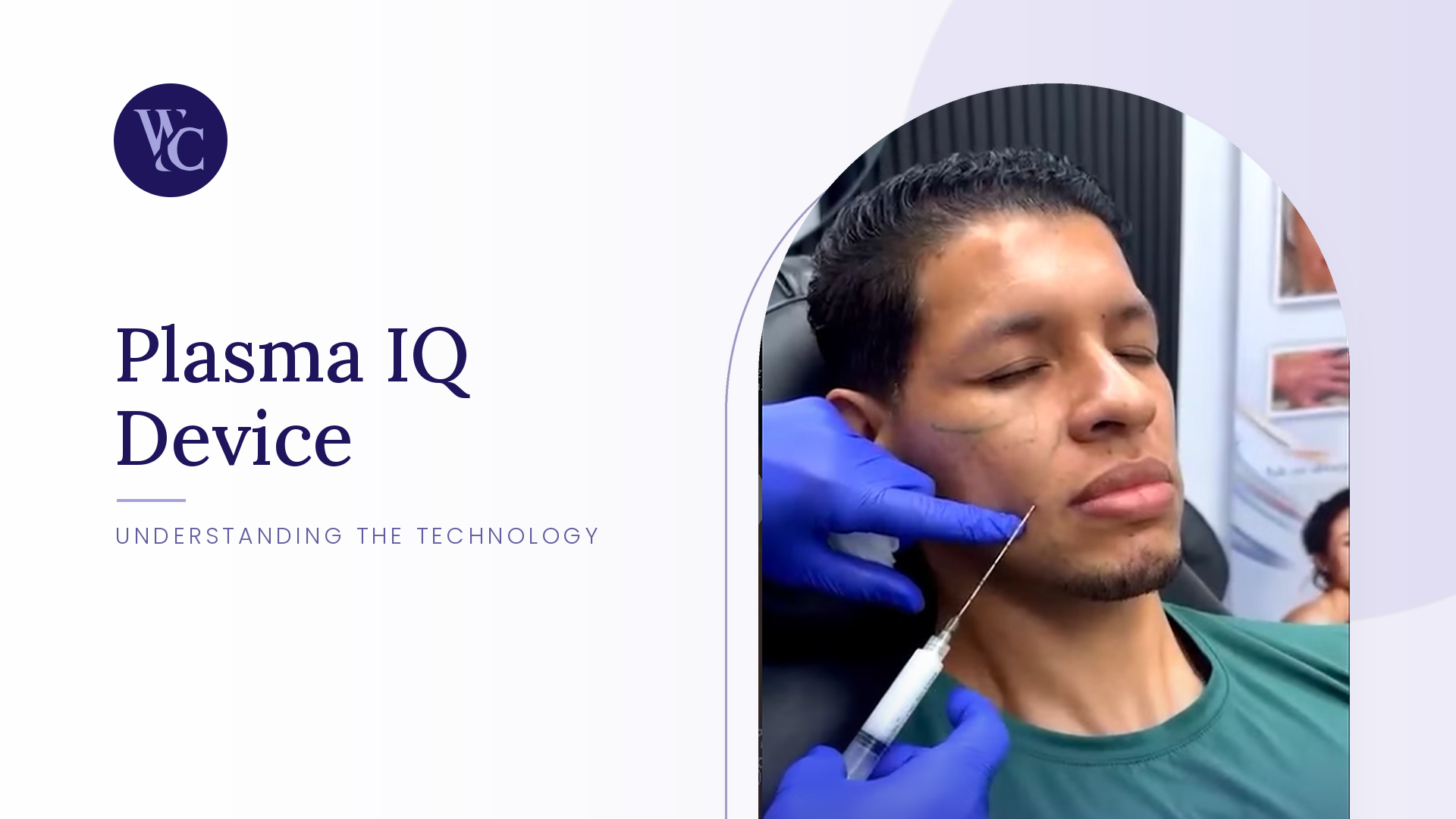
The Plasma IQ device is a handheld prescription electrosurgical system that produces a localized electrical arc by ionizing gas particles in the air between its electrode and the skin. According to the U.S. Food and Drug Administration’s official Plasma IQ 510(k) record, Plasma IQ is classified as a Class II electrosurgical cutting and coagulation device. Its FDA-cleared intended use is the removal and destruction of skin lesions and the coagulation of tissue. The manufacturer’s regulatory documentation describes the process as plasma sublimation, in which a radiofrequency generator within the handheld unit creates an electrical arc that produces controlled skin damage.
For patients at WaltCare Clinic, understanding the device helps put the treatment into perspective. WaltCare uses Plasma IQ within its aesthetic services for carefully selected concerns involving delicate or localized areas, including the upper and lower eyelids, fine lines around the mouth, and selected areas of laxity involving the jawline and neck. The technology offers precision, but the device itself does not determine whether a treatment will be appropriate. Patient selection, skin characteristics, treatment parameters, technique, recovery planning, and realistic expectations remain essential parts of the process.
This distinction is especially important because the word “plasma” now appears across a wide range of aesthetic products, including devices promoted online directly to consumers. A medical-grade prescription device with FDA clearance should not automatically be grouped together with every product marketed as a plasma pen. Understanding exactly what the Plasma IQ device is, how it works, and how it is used at WaltCare provides a more useful foundation for evaluating treatment.
What Exactly Is the Plasma IQ Device?
Plasma IQ is a cordless handheld electrosurgical device designed to generate a controlled electrical arc between an electrode and the surface of the skin. The FDA classifies the device under regulation 21 CFR 878.4400, which covers electrosurgical cutting and coagulation devices and accessories. The original Plasma IQ system received 510(k) clearance in 2020 under K192813, and subsequent versions have also gone through FDA clearance pathways.
The official FDA 510(k) summary for Plasma IQ provides an especially useful description of how the system operates. A radiofrequency generator housed inside the handheld device ionizes gas particles in the air, producing an arc between the electrode tip and the skin. The original system described in the clearance documentation uses a stainless-steel active electrode, while the handpiece itself is cordless and is charged before use.
This means Plasma IQ does not need to function like a conventional laser. It does not depend on a laser beam traveling into the tissue at a selected wavelength. Instead, the device generates an electrical plasma arc across the small gap between its electrode and the skin.
That difference is important because aesthetic treatments are often categorized together simply because they create controlled tissue injury. The method used to create that response influences treatment characteristics, tissue interaction, and how the provider approaches the procedure.
At WaltCare, this precision is one reason Plasma IQ treatment in Miami can be considered for relatively small areas where controlled treatment points are useful. However, precision does not eliminate the need for clinical judgment. The provider still needs to decide whether the patient’s concern is appropriate for the technology before deciding how the device should be used.
How Does the Plasma IQ Device Create Plasma?
Plasma is sometimes described as the fourth state of matter, following solid, liquid, and gas. In simple terms, plasma forms when sufficient energy is applied to a gas so that some of its particles become ionized. Those charged particles allow the gas to conduct electrical energy.
The Plasma IQ device creates this effect within a very small space between the electrode and the skin. The radiofrequency generator provides the energy necessary to ionize particles in the surrounding air, allowing an electrical arc to form. That arc interacts with the tissue at carefully selected points.
This is why the electrode does not need to function like a blade cutting across the surface. The energy bridges the small air gap between the tip and the tissue.
The resulting interaction creates controlled microthermal injury. A histological study published in the Journal of Cosmetic Dermatology and indexed by PubMed evaluated tissue treated with Plasma IQ and found discrete microthermal wounds extending into the superficial reticular dermis. Importantly, the investigators found that device power significantly influenced the depth and width of those treatment points.
That finding has practical implications. The device is not simply an on/off tool producing an identical effect every time it is activated. Treatment parameters influence what happens in the tissue, reinforcing why the technology should be used by appropriately trained professionals who understand the device and the anatomy being treated.
For WaltCare patients, this is one reason treatment should begin with evaluation rather than assuming a standard pattern or intensity will be appropriate for everyone.
What Does “Plasma Sublimation” Mean?
The manufacturer and regulatory documentation for Plasma IQ use the term plasma sublimation to describe the treatment method. This terminology can sound abstract, particularly for patients who encounter it for the first time.
In practical terms, the device creates very small, controlled treatment points where plasma energy interacts with superficial tissue. These points produce the characteristic dots visible immediately following treatment and later form the small carbon crusts associated with the Plasma IQ recovery period.
Recent histological research has provided additional information about these tissue effects. A 2026 study indexed by PubMed examined tissue effects produced by Plasma IQ under different settings and found well-demarcated, spatially confined areas of tissue sublimation. Higher settings increased the diameter of the treatment zones in the tissues studied, while the effects remained localized around the treatment area.
The study was performed ex vivo using animal tissue rather than as a clinical outcomes trial in human patients, so its findings should not be interpreted as proof of a particular cosmetic result. What it does provide is useful information about the localized nature of the tissue interaction created by the device.
For patients, the important concept is that Plasma IQ is designed to create controlled treatment points rather than broadly heating an entire facial region indiscriminately. This characteristic helps explain why WaltCare can consider the technology for smaller areas where precision matters.
Why Device Power Matters
One of the most important lessons from the available Plasma IQ research is that settings matter.
The histological study evaluating Plasma IQ treatment on upper-eyelid and preauricular skin found that increasing device power significantly influenced both the depth and width of the microthermal wounds created by the treatment. This is clinically relevant because tissue around the eyelids is not identical to tissue along the jawline, neck, or other facial areas.
The same device can therefore produce different tissue effects depending on how it is configured and used.
This is also why patients should be cautious about assuming that a more aggressive treatment will automatically produce a better result. Aesthetic procedures require a balance between creating the intended tissue response and allowing the area to heal appropriately. Increasing treatment intensity simply to create a stronger visible reaction may also increase unwanted tissue injury.
At WaltCare Clinic, treatment planning needs to consider the patient’s anatomy, skin characteristics, area being treated, degree of concern, and desired outcome. The technology provides the ability to deliver controlled treatment, but the provider determines how that technology should be applied.
This principle extends far beyond Plasma IQ. Medical devices do not replace clinical judgment. They make specific forms of treatment possible, while the experience and decision-making of the person using the technology help determine whether those capabilities are applied appropriately.
Why Plasma IQ Is Different From a Laser Device
Plasma IQ and laser resurfacing can both create controlled tissue effects, but they generate and deliver energy differently.
A laser produces concentrated light at a specific wavelength. Depending on the wavelength and technology, that light interacts with particular components within the skin. Ablative lasers can remove or vaporize microscopic portions of tissue, while nonablative technologies may heat targeted structures without removing the surface in the same manner.
The Plasma IQ device does not rely on a laser wavelength. Its radiofrequency generator ionizes gas particles in the air to create the electrical plasma arc that interacts with the skin.
This difference does not mean Plasma IQ is universally better or safer than laser treatment. It means the technologies have different mechanisms and can occupy different roles within aesthetic medicine.
WaltCare makes this distinction within its own services. Its Plasma IQ treatment is positioned for targeted areas where localized precision may be useful, while broader resurfacing technologies can be considered for different skin concerns.
A patient with localized eyelid laxity may therefore have different treatment needs from someone seeking full-face improvement in photodamage, texture, pigmentation, and wrinkles. Comparing the devices only according to which technology sounds newer overlooks the more important question of which mechanism best matches the concern.
Why the Handheld Design Is Useful for Delicate Areas
The physical design of Plasma IQ contributes to the type of treatment it can provide. The device is compact, handheld, and cordless, allowing the provider to work in a controlled manner across small areas.
This can be especially relevant around facial features where treatment needs to be precise. The eyelids, lip region, and selected areas along the jawline are anatomically different from large surfaces such as the abdomen or back. Small changes in treatment placement can matter more when working close to structures such as the eyes.
WaltCare specifically identifies the upper and lower eyelids, fine lines around the mouth, jawline, and neck among areas where Plasma IQ can be considered. This does not mean every patient with concerns in those areas is automatically a candidate. Rather, the device gives the provider a tool capable of delivering localized treatment when the anatomy and concern are appropriate.
The precision of a handheld device can also help the provider design the pattern of treatment points according to the area being addressed rather than applying energy uniformly across every part of the face.
Again, however, the device’s physical precision needs to be paired with anatomical knowledge. Being able to place an energy point accurately is only useful when the provider also understands where and why that point should be placed.
What Recent Research Says About Plasma IQ Around the Eyes
The eye area is particularly relevant when discussing the Plasma IQ device because both WaltCare and published research have focused on periorbital treatment.
A 2026 clinical study indexed by PubMed evaluated 30 patients with facial skin laxity and photodamage who received treatment with Plasma IQ. Researchers assessed patients before treatment and at several points afterward, including 90 days.
The study reported measurable improvement in skin elasticity and changes in upper-eyelid measurements following treatment. It also reported improvements in wrinkles around the eyes. These findings provide device-specific clinical data supporting the potential role of Plasma IQ in periorbital rejuvenation.
At the same time, the study has limitations that patients should understand. It included only 30 participants, and several authors had employment or consulting relationships with organizations connected to the device. Those factors do not automatically invalidate the results, but they should be considered when interpreting the strength and independence of the evidence.
This type of nuance is important in aesthetic medicine. One positive study does not mean every patient will obtain the same result, nor does it establish that the device is appropriate for every type of eyelid concern.
At WaltCare, patient selection remains essential because eyelid appearance can be influenced by skin laxity, excess tissue, fat distribution, brow position, volume changes, and facial anatomy. The device can only address the components that match its mechanism.
What Does FDA-Cleared Actually Mean for the Plasma IQ Device?
The phrase “FDA-cleared” is frequently used in aesthetic marketing, but patients should understand what it actually means.
Plasma IQ went through the FDA’s 510(k) pathway. Under this process, a manufacturer demonstrates that a medical device is substantially equivalent to an appropriate legally marketed predicate device for its intended use and technological characteristics.
The FDA database lists Plasma IQ under 510(k) K192813 as a Class II prescription electrosurgical device. Its cleared intended use is the removal and destruction of skin lesions and coagulation of tissue. A later Plasma IQ submission, K212329, retained the same stated intended use.
This terminology matters because “FDA-cleared” should not be rewritten as “FDA-approved for every cosmetic claim associated with Plasma IQ.” Clearance of the device does not mean the FDA has independently verified every marketing statement involving wrinkle reduction, skin tightening, collagen stimulation, or facial rejuvenation.
At WaltCare, patients can still discuss aesthetic applications of the device, but those discussions should distinguish regulatory clearance from the broader clinical use of the technology.
Understanding this distinction creates a more informed patient rather than diminishing the value of the device.
Medical-Grade Plasma IQ Is Not the Same as Every Online Plasma Pen
The popularity of plasma-based aesthetic procedures has created a large online marketplace for products described as plasma pens, fibroblast pens, or skin-tightening devices. Similar terminology can make these products appear interchangeable with professional medical devices.
They are not necessarily the same.
The Plasma IQ device has identifiable FDA clearance records, defined technical characteristics, a regulatory classification, and specific intended uses. An inexpensive device sold through an online marketplace may have completely different energy output, manufacturing standards, quality controls, electrodes, safety testing, or regulatory status.
This distinction becomes especially important because plasma treatment intentionally creates tissue injury. An uncontrolled or poorly understood energy source can produce burns, scarring, pigmentation changes, or other complications.
Patients should therefore avoid assuming that because they have watched a Plasma IQ procedure online, a consumer plasma pen performs the same treatment. Even when two devices appear physically similar, their engineering and output may differ considerably.
Receiving treatment at WaltCare Clinic also adds another layer beyond the device itself: evaluation, professional application, aftercare instructions, and the ability to assess whether a reaction during recovery is expected or needs additional attention.
Why Skin Type Still Matters Even With a Precise Device
Precision does not eliminate biological variation.
Every patient’s skin responds to controlled injury differently. Melanin activity, previous sun exposure, history of hyperpigmentation, skin thickness, healing characteristics, medications, and previous procedures can all influence the recovery process.
Post-inflammatory hyperpigmentation is particularly relevant because inflammation can stimulate pigment production. WaltCare specifically notes the need for careful assessment in medium and deeper skin tones when considering Plasma IQ because of this risk.
The ability of the device to create small, localized treatment points does not make pigmentation risk disappear. Instead, appropriate settings, patient selection, sun protection, and aftercare become especially important.
Patients should tell their WaltCare provider if they frequently develop dark marks following acne, cuts, burns, waxing, chemical peels, or previous aesthetic procedures. That history can provide valuable information about how their skin tends to respond to inflammation.
This is another example of why purchasing the technology is not equivalent to knowing how to use it appropriately. The device delivers the energy. The provider needs to understand the person receiving it.
What Happens Immediately After the Device Is Used?
Once Plasma IQ creates the selected treatment points, the skin begins a healing response. Small brown dots or carbon crusts become visible across the treated area. These are an expected part of the procedure rather than dirt, pigmentation that should be scrubbed away, or something that needs to be manually removed.
WaltCare advises that these crusts generally remain for approximately five to seven days before naturally separating from the skin. Picking, scratching, or aggressively exfoliating them can interfere with healing and may increase the risk of pigmentation or other unwanted effects.
Swelling can also occur, particularly around the eyes. This matters because patients sometimes interpret “nonsurgical” as meaning they will look completely untreated immediately afterward. Plasma IQ may avoid surgical incisions, but it still creates a deliberate tissue response.
Patients planning treatment at WaltCare should therefore think about work, social events, travel, outdoor activities, and important photographs before choosing a treatment date.
Recovery planning is part of using the device responsibly. A technically successful procedure can still become frustrating for a patient who did not understand what the skin would look like during the first week.
Why Miami Sun Exposure Matters After Plasma IQ
WaltCare patients live in or visit an environment where strong ultraviolet exposure is common throughout the year. That makes sun protection particularly important after a procedure that intentionally creates controlled skin injury.
Freshly treated skin should not be treated as though it were normal, fully recovered skin. UV exposure during the healing period can contribute to unwanted pigmentation and interfere with the recovery process.
This means scheduling matters. A patient planning several days at the beach, prolonged outdoor activities, boating, or a sunny vacation immediately after Plasma IQ should discuss those plans before treatment.
Sun protection is also not limited to the first day. WaltCare emphasizes protecting the treated area while the carbon crusts heal, and patients should follow the clinic’s specific instructions about sunscreen and other skincare products as recovery progresses.
In Miami, aftercare is not a minor footnote to the procedure. It is part of protecting the result.
Why Plasma IQ Is Only One Tool Within WaltCare’s Aesthetic Services
An advanced device can become less useful when every aesthetic problem is interpreted as an indication for that device. WaltCare’s advantage is that Plasma IQ exists alongside other treatment options rather than functioning as the clinic’s only method of facial rejuvenation.
A patient whose concern primarily involves lost facial volume may be better served by discussing Restylane at WaltCare Clinic. Someone interested in the balance between several facial features can explore Facial Harmonization. Patients with broader skin-quality concerns may require a different technology or treatment strategy.
This variety allows Plasma IQ to be used where its precision is most relevant rather than forcing the device into problems that require another mechanism.
It also helps avoid overtreatment. A patient does not automatically need Plasma IQ plus fillers plus other procedures simply because WaltCare offers them. Combination treatment should have an anatomical and aesthetic rationale.
The objective is to identify which tissue needs to change and then choose the treatment capable of producing that change.
Device Technology Does Not Replace Provider Experience
Aesthetic devices are increasingly sophisticated, but the quality of the technology should never create the impression that treatment has become automatic.
The Plasma IQ device can generate controlled electrical arcs and reproducible tissue effects, but it does not independently evaluate the patient’s skin, determine whether laxity is mild or advanced, recognize a history of abnormal pigmentation, understand aesthetic proportions, or decide whether another treatment would be more appropriate.
Those decisions belong to the provider.
Published histological research showing that power settings influence the dimensions of Plasma IQ microthermal wounds further demonstrates why this matters. Selecting parameters is part of the treatment, not merely turning the device on.
Provider experience also matters during recovery. Knowing what is expected after treatment and recognizing when a reaction falls outside the normal healing pattern are important components of medical aesthetic care.
For WaltCare patients, the treatment should therefore be understood as a combination of technology and professional decision-making. The device makes precision possible; appropriate clinical use determines how that precision is applied.
What Should Patients Ask About the Plasma IQ Device?
Patients do not need to become biomedical engineers before receiving an aesthetic treatment, but understanding the basic technology can lead to better questions during consultation.
Ask why Plasma IQ is appropriate for the specific concern being treated. Patients can also ask what the device is expected to change, what it cannot change, how treatment settings are selected, and whether their skin type influences the procedure.
It is also reasonable to ask about recovery. Patients should know what the treatment points will look like, how long the carbon crusts generally remain, what swelling may occur, which skincare products should be avoided, and how sun exposure should be managed.
Patients comparing Plasma IQ with laser treatment or another technology can ask why one mechanism is being recommended over another. The answer should relate to their skin and goals rather than simply claiming one device is universally superior.
Finally, patients should discuss previous aesthetic procedures. Fillers, lasers, chemical peels, threads, surgery, and other treatments may influence how a provider evaluates the current tissue and plans future care.
Understanding the Plasma IQ Device Before Choosing Treatment
The Plasma IQ device represents an interesting development in precision electrosurgical technology. Rather than using laser light, it uses a radiofrequency generator to ionize gas particles and create a localized electrical arc between the electrode and skin. FDA documentation classifies Plasma IQ as a Class II prescription electrosurgical device, while histological research demonstrates that it creates controlled, localized microthermal tissue effects whose dimensions can vary according to treatment power.
Recent clinical research has also provided device-specific evidence for periorbital applications, although the available studies should be interpreted according to their sample sizes, design, and potential conflicts of interest.
For WaltCare Clinic, however, the technology is only part of the treatment. The value of Plasma IQ comes from determining when its precision matches a patient’s concern and when another option would be more appropriate. Patients with localized eyelid changes, fine lines around the mouth, or selected areas of mild to moderate laxity can be evaluated for Plasma IQ treatment at WaltCare Clinic, while the clinic’s broader aesthetic services allow different causes of facial aging to be treated according to their actual anatomy.
For someone researching a Plasma IQ device because they are considering treatment, the most important takeaway is that the device should not be evaluated in isolation. Regulatory status, technology, treatment parameters, provider experience, patient selection, skin type, and recovery all contribute to the treatment process.
Patients interested in learning whether Plasma IQ technology is appropriate for their skin can schedule a personalized consultation with WaltCare Clinic in Miami Lakes. The clinical team can evaluate the treatment area, discuss realistic expectations, and determine whether Plasma IQ or another WaltCare aesthetic treatment is better aligned with the desired result.
WaltCare Clinic
6625 Miami Lakes Dr, Suite 381
Miami Lakes, FL 33014
Phone: (786) 673-0473
Learn more about Plasma IQ Treatment at WaltCare Clinic
Medical Disclaimer
This content is for educational purposes only and does not replace personalized medical advice. Plasma IQ treatment should be performed following appropriate professional evaluation, and individual results and risks can vary.