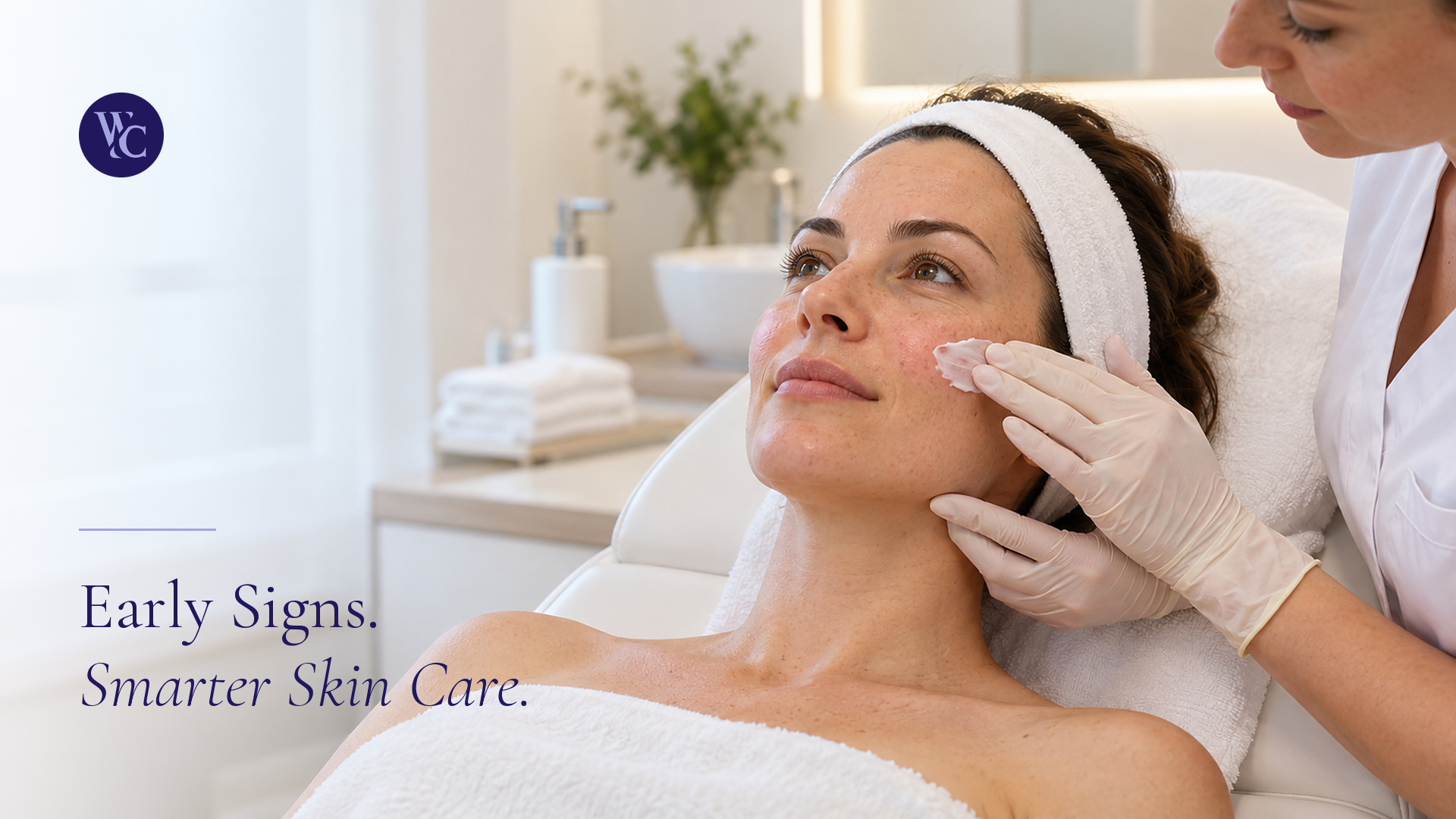
Booking a facial can feel complicated when your skin has reacted unexpectedly in the past. A product described as gentle may have caused stinging. A previous appointment may have left you uncomfortable, or you may be unsure whether an occasional reaction is important enough to mention. You want help choosing a treatment, but you also want to avoid repeating an unpleasant experience.
If you are searching for a facial near me, convenience is only one part of the decision. For sensitive or reactive skin, the conversation before treatment matters just as much as the appointment itself. A provider needs to understand what happened previously, what you currently use, and how your skin feels now before deciding whether a facial is appropriate.
WaltCare Clinic is located in Miami Lakes and offers Préime Dermafacial among its aesthetic services. The presence of a treatment on a service menu does not establish that it is suitable for every person with sensitive skin. Use the consultation to discuss your history and ask whether the proposed approach should be modified, postponed, or replaced by a medical evaluation.
Explain What “Sensitive Skin” Means in Your Experience
The phrase “sensitive skin” does not tell a provider exactly what you have experienced. You might mean that your skin feels tight after cleansing, that certain products sting, or that you develop an itchy rash after trying something new. Someone else may use the same phrase to describe flushing or a diagnosed skin condition.
Describe the symptoms in ordinary language rather than trying to identify the cause yourself. Explain where the reaction occurred, how soon you noticed it, how long it lasted, and whether you needed treatment. These details give the provider a clearer starting point than a general request for the gentlest facial available.
It is also useful to distinguish what you know from what you suspect. “This cleanser caused a rash twice” is different from “I think I may react to fragrance.” Both observations are worth sharing, but neither should be converted into a confirmed diagnosis without appropriate assessment.
Bring a Short Reaction History
A practical record can include the product or treatment name, the date or approximate period, the symptoms, and what happened afterward. If you have photographs of a past reaction, ask whether they would help during the consultation.
Do not deliberately repeat an exposure to recreate the symptoms. Existing records are useful; provoking another reaction is unnecessary.
Share Diagnosed Conditions and Current Symptoms
Tell the provider if a healthcare professional has diagnosed rosacea, eczema, contact dermatitis, or another condition affecting your face. Also explain whether you currently have symptoms and whether you are following a prescribed treatment plan.
The American Academy of Dermatology’s rosacea guidance explains that rosacea can make skin easily irritated and advises avoiding rubbing, scrubbing, massage, and exfoliation that aggravate it. That is a reason to discuss the actual steps of a proposed facial rather than assuming every facial can be made appropriate simply by using a different serum.
A cosmetic appointment should not replace evaluation of an unexplained or persistent skin problem. If the provider recommends addressing a medical concern first, ask what information or assessment is needed before reconsidering treatment.
Ask Whether Your Skin Should Be Assessed Before the Appointment
When booking, describe any current rash, significant irritation, or unresolved reaction. Ask whether the appointment should begin with an assessment rather than a preselected facial.
Providing that information early gives the clinic an opportunity to explain the appropriate next step. It also reduces the pressure to proceed simply because treatment time has already been reserved.
Bring Your Current Skin Care Routine
A provider cannot evaluate your routine accurately from descriptions such as “an acne cream” or “an anti-aging serum.” Bring the product names, photographs of labels, or a written list. Include products you use occasionally, not just those applied every morning.
The American Academy of Dermatology’s guidance on facial masks notes that adding ingredients already present in a routine can contribute to irritation—for example, combining an exfoliating mask with other exfoliating products. This makes your home routine relevant even when the proposed facial uses different brands.
Explain when you last used each active product and whether you recently introduced anything new. The goal is to help the provider understand the whole routine rather than considering the facial in isolation.
Include Prescriptions and Recent Procedures
Mention prescription skin treatments and relevant medications, along with recent peels, laser treatments, waxing, or other facial procedures. Give dates when possible.
Ask the treating professional whether preparation changes are necessary. Do not stop prescribed treatment or choose a waiting period on your own. If instructions from different providers appear inconsistent, request clarification before proceeding.
Ask What the Facial Actually Includes
A treatment name may describe a collection of steps rather than one uniform procedure. Ask the provider to walk through the proposed appointment and explain which elements would be used in your case.
Questions can cover cleansing products, exfoliation, extraction, heat, massage, masks, serums, and any device-based steps. The purpose is not to insist that every element is unsuitable. It is to understand the plan well enough to discuss your previous reactions and preferences.
Ask which steps are optional and whether changing the plan changes the expected benefit. A shortened or modified appointment may have a different objective from the full treatment. That difference should be clear before you agree to proceed.
Discuss Heat and Exfoliation Specifically
For people with rosacea, the National Rosacea Society’s advice on salon and spa visits recommends calling ahead, reviewing products, and avoiding potentially aggravating heat and exfoliation.
Tell the provider if hot towels, steam, scrubs, or previous peels have caused problems for you. Ask how that history affects the recommendation. A general promise of customization is less useful than an explanation of which steps would be changed and why.
Review Ingredients Beyond Marketing Labels
Words such as “natural,” “gentle,” and “for sensitive skin” can make a product sound reassuring. They do not replace an ingredient review or your personal reaction history.
The FDA’s information on allergens in cosmetics explains that terms including “hypoallergenic” and “for sensitive skin” do not have a federal standard or definition governing their use in the United States. Ask about the actual products proposed, especially if you have a documented allergy.
If you have a clinician-provided allergen list, bring it. Product names alone may not make an ingredient concern obvious, and formulas can differ. Ask the provider to confirm the products intended for your appointment rather than relying only on a general brand description.
Mention Fragrance Reactions Without Assuming Every Product Is Equivalent
The American Academy of Dermatology recommends gentle, fragrance-free products for dry, sensitive skin and explains that “unscented” products may contain ingredients used to conceal odors.
If fragrance has been a concern, describe the experience and share any confirmed findings. Do not assume a pleasant-smelling botanical product is automatically appropriate or that a product with little noticeable scent is necessarily free of relevant ingredients.
Understand What a Small Product Test Can and Cannot Establish
Ask whether a product test is appropriate before introducing something new. A limited test may provide useful information, but it should not be treated as a guarantee that an entire facial will be tolerated.
The AAD’s guidance on testing skin care products describes testing new products over several days before broader use. That is different from briefly applying a product immediately before an appointment.
Medical patch testing is another distinct process. The AAD explains that dermatologists may recommend patch testing when investigating recurring skin reactions and suspected contact allergy. Ask a qualified clinician whether that evaluation is relevant rather than treating an informal spot test as a diagnostic substitute.
Agree on How to Communicate During Treatment
Before the appointment begins, ask how to communicate discomfort and what sensations the provider expects from the specific procedure. Agree that you can ask for a pause if something feels concerning.
Describe what you feel clearly. “This is becoming more painful” or “the itching started after that product” is more useful than remaining silent because you assume discomfort is necessary for results.
Do not use discomfort as a measure of effectiveness. The relevant question is whether what you are experiencing matches the provider’s explanation and whether continuing is appropriate. If you are uncertain, speak up and let the professional reassess.
Plan Aftercare Before Adding New Products
Ask what your routine should look like afterward and whether any usual products need temporary adjustment. Request instructions specific to the treatment actually performed, particularly if the original plan was modified.
Clarify which products are necessary and which are optional. If a new product is recommended, ask how it fits with the products you already use and what to do if you experience a reaction. Avoid introducing several unrelated recommendations from different sources without discussing them.
Also ask how to contact the clinic with questions. Written instructions are useful, but they should include a clear path for obtaining advice when something is unexpected.
Use a Booking Checklist
Before confirming a facial near me appointment, organize the information most relevant to your consultation.
Topic | Information to share or request |
Previous reactions | Symptoms, timing, product names, and available photographs |
Diagnosed conditions | Relevant diagnoses and current treatment |
Current symptoms | Irritation or unresolved concerns present now |
Home routine | Exact products, frequency, and recent changes |
Medications | Relevant prescriptions and other treatments |
Recent procedures | Type, date, and recovery instructions |
Proposed facial | Steps, products, and possible modifications |
Testing questions | Whether product testing or medical evaluation is appropriate |
Aftercare | Routine adjustments and contact instructions |
You do not need a perfect record to ask for an assessment. Bring what you know and identify the details you are unsure about.
Frequently Asked Questions About Facials for Sensitive Skin
Can sensitive skin receive a facial?
That depends on the individual assessment, current symptoms, and proposed procedure. Ask whether treatment is appropriate now and which steps, if any, should be modified.
Is a facial a treatment for an unexplained rash?
A cosmetic facial should not replace medical evaluation of an unexplained rash. Discuss persistent or recurring symptoms with a qualified healthcare professional before booking treatment around them.
Should I stop my skin medication before an appointment?
Do not stop prescribed treatment independently. Tell the provider what you use and request instructions coordinated with the clinician responsible for your medication when necessary.
Does “hypoallergenic” mean I cannot react?
No label can establish your individual tolerance. Share confirmed allergies and review the actual products proposed.
Can a quick spot test guarantee the facial will be safe?
No. Ask what the test is intended to assess and understand that it does not evaluate every product, procedural step, or possible reaction.
What if my skin changes after I book?
Contact the clinic before the appointment and describe the change. Ask whether the plan should be reassessed rather than assuming the original booking remains appropriate.
Discuss Your Skin History With WaltCare Clinic
A useful facial consultation begins with your experience: what your skin has reacted to, what you currently use, and what you hope to address. That information helps the provider evaluate the proposed treatment instead of relying on a general sensitive-skin label.
If you are searching for a facial near me in the Miami Lakes area, contact WaltCare Clinic to discuss your concerns before booking. Ask whether Préime Dermafacial or another approach is appropriate for your current skin condition, and bring your product list and reaction history to the assessment.
This article provides general educational information and does not diagnose sensitive skin, allergy, rosacea, or dermatitis. Treatment suitability and preparation require individualized professional guidance. Seek immediate medical care for a severe reaction involving breathing difficulty or swelling of the lips, tongue, or throat.