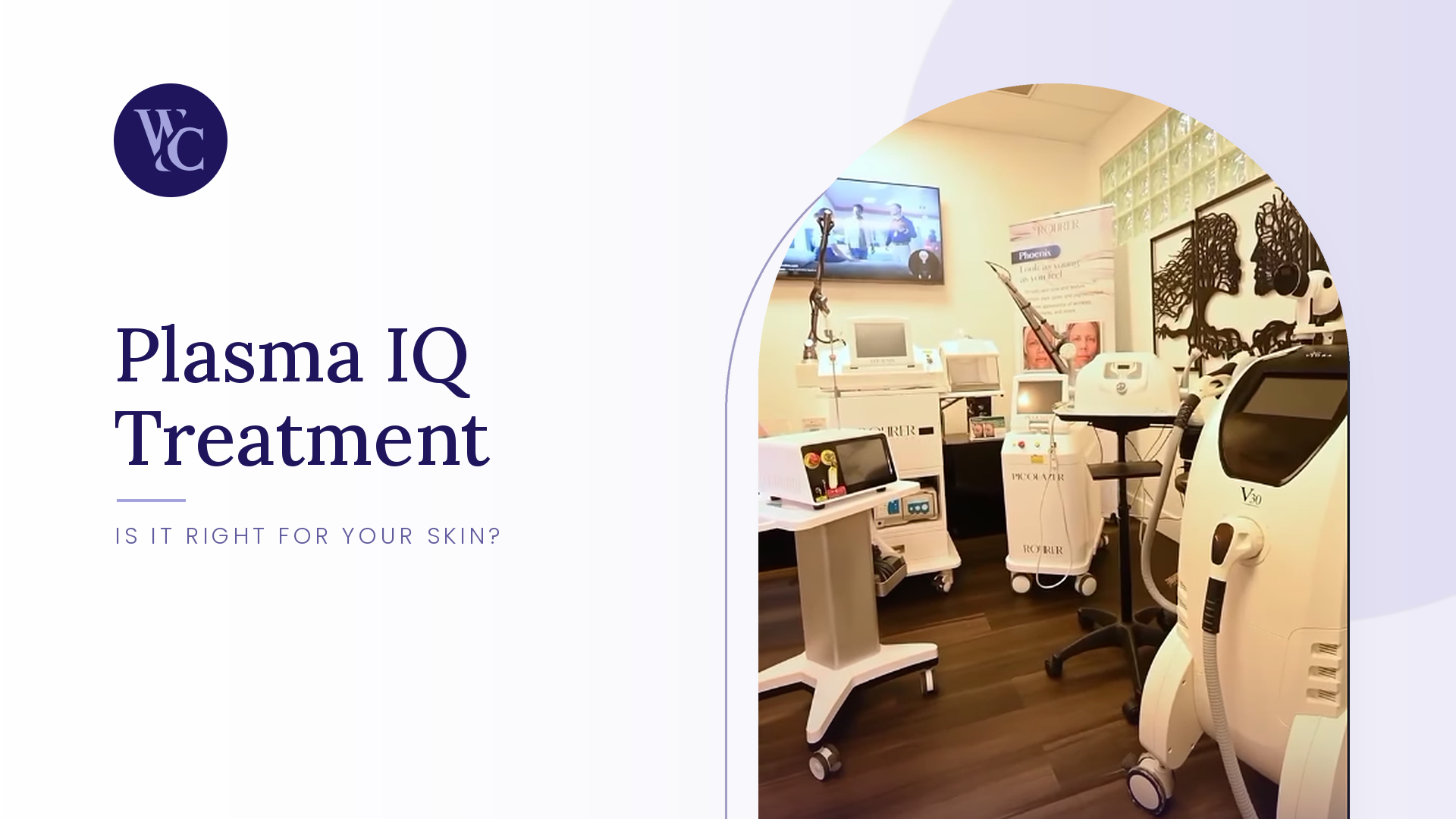
The growing number of nonsurgical aesthetic treatments has given patients more ways to address visible signs of aging without immediately considering surgery, but having more options also makes choosing the right treatment more complicated. Fine lines, eyelid laxity, changes around the mouth, reduced jawline definition, and loose skin can look similar at first glance, yet they do not necessarily develop for the same reason or respond equally well to the same procedure. This is particularly important with plasma-based technologies, where appropriate patient selection can influence both the treatment experience and the final aesthetic outcome.
For patients researching Plasma IQ treatment, the most useful question is therefore not simply whether the technology can tighten skin. The more important question is whether the specific concern a patient wants to improve is actually one that Plasma IQ is suited to address. At WaltCare Clinic, Plasma IQ is used as part of a broader aesthetic treatment portfolio, allowing the clinical team to evaluate the treatment area, degree of skin laxity, skin characteristics, healing considerations, and individual goals before recommending a procedure.
WaltCare already uses Plasma IQ for carefully selected areas where precision can be especially valuable, including the upper and lower eyelid region, lines around the lips, and areas of early laxity involving the neck and jawline. However, the clinic also offers other technologies and aesthetic treatments, which means a patient does not need to be placed into a Plasma IQ treatment plan simply because they arrived asking for one. A consultation can instead determine whether the concern involves superficial skin changes, volume loss, muscle activity, deeper tissue laxity, or several factors occurring simultaneously.
That distinction creates the foundation for a more personalized approach to Plasma IQ treatment. The device can be useful, but the quality of the treatment plan depends on matching the technology to the right patient and the right concern.
Understanding What Plasma IQ Actually Does to the Skin
Plasma IQ is a prescription electrosurgical device that generates an electrical arc by ionizing gas particles in the air between the electrode and the skin. According to the FDA’s official Plasma IQ 510(k) documentation, the device uses what the manufacturer describes as plasma sublimation to create controlled skin damage and is cleared for the removal and destruction of skin lesions and coagulation of tissue.
That regulatory description is important because aesthetic marketing often uses broader language such as “fibroblasting,” “skin tightening,” or “nonsurgical rejuvenation.” Patients should understand the distinction between the device’s FDA-cleared indications and the broader aesthetic applications discussed in clinical practice. FDA clearance does not mean that every aesthetic claim associated with a device has independently been proven or specifically cleared by the agency.
During treatment, the plasma arc produces highly localized effects at selected points on the skin. These controlled treatment points create a visible tissue response, and small crusts typically develop during the initial healing period. The procedure is therefore fundamentally different from applying a topical product or receiving a facial. The skin has been intentionally treated and requires an appropriate healing period.
Plasma technology also differs from lasers. Lasers use specific wavelengths of light to interact with targeted tissue components, while Plasma IQ generates an electrical arc through ionized gas. Understanding that difference helps explain why WaltCare can consider Plasma IQ and other technologies separately rather than treating every energy-based aesthetic procedure as interchangeable.
Why WaltCare Evaluates the Problem Before Choosing Plasma IQ
A patient may look in the mirror and describe the concern simply as “loose skin,” but that description does not explain what is happening beneath the surface. Visible aging is usually the result of changes occurring across several anatomical layers. Skin quality changes, collagen and elastin production evolve, facial fat distribution can shift, deeper support structures change, and facial volume may decrease over time.
The same visible area can therefore require very different treatments in different patients. Consider the lower face. One person may primarily have mild superficial laxity along the jawline, while another has significant submental fullness. A third may have substantial volume loss in the midface that changes how the lower face appears, and a fourth may have advanced tissue descent that exceeds what a minimally invasive procedure can reasonably correct.
Using Plasma IQ simply because all four patients describe their concern as a less-defined jawline would ignore those anatomical differences.
This is one reason WaltCare offers several approaches to facial rejuvenation. Plasma IQ can be considered when localized skin tightening and surface-level tissue response align with the patient’s concern, while other services may make more sense when the issue involves volume, muscle movement, fat, or deeper tissue changes. Patients interested in a broader evaluation can also explore Facial Harmonization at WaltCare Clinic rather than selecting one procedure before the face has been assessed as a whole.
The treatment should follow the diagnosis of the aesthetic concern, not the other way around.
Why the Eyelid Area Is One of the Most Discussed Applications
The upper and lower eyelids are among the areas most commonly associated with plasma-based aesthetic treatments because the skin surrounding the eyes is thin and can develop visible laxity, creasing, and textural changes over time. Even relatively small changes around the eyes can affect how rested or aged the entire face appears.
WaltCare identifies the upper and lower eyelids among the areas treated with Plasma IQ. For appropriately selected patients with certain degrees of eyelid laxity or fine wrinkling, the precision of individual plasma treatment points can make the technology worth considering.
Clinical research provides some support for this application. A study indexed by PubMed evaluating plasma exeresis for periorbital rejuvenation followed 56 women treated for dermatochalasis and periorbital wrinkles and reported improvements in measures of eyelid laxity after a series of treatments. The researchers nevertheless emphasized appropriate performance and patient selection, and the study should not be interpreted as proof that every patient with eyelid concerns will obtain the same result.
This is especially important because not every eyelid concern is primarily a skin-tightening problem. Prominent fat pads, significant excess skin, brow position, facial anatomy, volume changes, and other factors can contribute to the appearance of the eye area. A patient with substantial upper-eyelid hooding may have different needs from someone beginning to notice fine crepey skin.
Plasma IQ is also not equivalent to surgical blepharoplasty. Surgery can remove excess tissue and address anatomical concerns that a surface-focused minimally invasive procedure cannot reproduce. WaltCare patients considering Plasma IQ around the eyes should therefore understand the degree of improvement that can realistically be expected from a nonsurgical treatment.
Fine Lines Around the Mouth Need a Different Kind of Assessment
The perioral area presents another example of why identifying the cause matters. Fine vertical lines around the lips can develop through repeated muscle movement, collagen loss, cumulative sun exposure, changes in skin quality, smoking history, facial volume changes, and natural aging. Several of those factors can occur at the same time.
WaltCare includes the lip border and fine lines around the mouth among the areas where Plasma IQ may be considered. In a patient whose concern involves superficial texture and localized skin changes, plasma treatment may fit within the rejuvenation plan. However, a patient whose main issue is lost volume may require an entirely different strategy.
This is where comparing treatments by mechanism becomes useful. Restylane treatments at WaltCare Clinic involve hyaluronic-acid dermal fillers intended to address selected volume and contour concerns. Plasma IQ does not work by adding volume. Treating volume loss with a surface-tightening strategy alone may therefore leave the primary cause of the concern unchanged.
Likewise, dynamic lines caused predominantly by repetitive muscle activity are different from static skin texture. WaltCare offers injectable options for muscle-related facial lines as well, which means the clinical team can evaluate whether skin, volume, movement, or a combination is producing the visible change.
For the patient, the benefit of this approach is a more logical treatment plan. The question becomes not “Can Plasma IQ be used around my mouth?” but “What is causing the lines around my mouth, and which WaltCare treatment best addresses that cause?”
Mild Skin Laxity and Significant Excess Skin Are Not the Same Problem
One of the most important considerations when evaluating Plasma IQ is the degree of laxity present before treatment. A patient noticing early changes in skin firmness is starting from a very different anatomical position than someone with substantial loose or redundant tissue.
Minimally invasive aesthetic procedures generally have limits. Controlled plasma treatment can create localized tissue effects, but it does not remove large amounts of excess skin in the same way surgery can. This distinction should be made before treatment rather than after a patient discovers that the improvement was more subtle than expected.
At WaltCare, Plasma IQ can be evaluated for early to moderate concerns involving areas such as the eyelids, lip region, jawline, and neck. The goal should be proportional improvement rather than promising a surgical transformation from a nonsurgical procedure.
This is also why photographs of another person’s results should not determine candidacy. Two patients can be the same age and have completely different skin thickness, sun-damage history, facial anatomy, collagen characteristics, and degrees of laxity. A result achieved in one patient does not establish what another person will experience.
Personalized aesthetic medicine requires assessing the starting point before discussing the destination.
Skin Tone Is an Important Part of Plasma IQ Treatment Planning
Any procedure that intentionally creates inflammation or controlled skin injury can potentially produce pigment changes during healing. Post-inflammatory hyperpigmentation occurs when inflammation stimulates increased pigment production, leaving darker areas after the original injury has resolved. The risk varies according to skin characteristics, treatment parameters, sun exposure, healing behavior, and other individual factors.
This consideration is particularly relevant with plasma-based procedures because visible treatment points are intentionally created on the skin. WaltCare specifically notes that patients with medium to deeper skin tones require careful assessment because of the possibility of post-inflammatory hyperpigmentation.
This does not mean that skin tone alone determines whether someone can or cannot receive treatment. It means that candidacy should be assessed carefully rather than assuming that the same protocol applies to every patient.
A history of pigmentation after acne, burns, irritation, procedures, or minor injuries can provide useful information. Patients should tell their WaltCare provider if they commonly develop dark marks after inflammation, because previous healing patterns may help inform treatment planning.
Scientific literature also demonstrates why this caution matters. A PubMed analysis of plasma or fibroblast pen use discusses potential adverse effects associated with these technologies, including dyspigmentation, scarring, and burns, particularly in the context of unregulated devices and inappropriate use. The study is especially relevant because it illustrates the difference between professionally selected medical treatment and the uncontrolled plasma-pen procedures promoted through social media.
Miami Sun Exposure Makes Aftercare Particularly Important
Aftercare matters with any procedure that creates controlled injury, but sun protection deserves particular attention for WaltCare patients in South Florida. Miami’s year-round ultraviolet exposure makes it easier for recently treated skin to encounter substantial sunlight even during ordinary daily activities.
Following Plasma IQ treatment, WaltCare instructs patients to allow the small crusts created during the procedure to separate naturally rather than picking or rubbing them. Manipulating healing skin can interfere with recovery and may increase the risk of unwanted pigmentation or other complications.
Sun protection should also be treated as part of the procedure rather than an optional skincare recommendation. Patients need to plan for recovery before scheduling treatment, particularly if they expect to spend significant time outdoors, at the beach, traveling, or participating in activities involving prolonged sun exposure.
This practical consideration can influence timing. Someone with an outdoor vacation planned immediately after treatment may benefit from discussing whether another date is more appropriate. Likewise, patients who cannot realistically follow aftercare instructions should mention that during consultation.
An aesthetic procedure is not limited to the minutes spent using the device. Preparation and healing are part of the treatment process.
What Recovery After Plasma IQ Actually Looks Like
The term “nonsurgical” can create unrealistic expectations about downtime. Plasma IQ does not involve traditional surgical incisions, but it intentionally creates controlled treatment points on the skin, which means the treated area will look visibly different while it heals.
WaltCare explains that small brown carbon crusts can remain for approximately five to seven days before naturally flaking away. Swelling can also occur, particularly when the eye area is treated. Depending on the location and individual response, patients may need to account for a period during which the treatment is noticeable.
This is an important consideration for patients with work obligations, events, photography, weddings, travel, or other commitments. A person may technically be able to perform normal daily activities while still feeling uncomfortable with the visible appearance of healing skin.
Patients should also understand that removing crusts early is not a shortcut to faster recovery. Those areas should be allowed to heal according to the instructions provided by the clinical team. Picking, scratching, aggressive exfoliation, or introducing irritating skincare prematurely can interfere with the process.
At WaltCare, discussing recovery before treatment helps patients choose a date when they can realistically follow aftercare instructions instead of discovering afterward that the procedure requires more visible healing than they anticipated.
Why Plasma IQ Should Not Be Compared Only by Downtime
Patients often compare aesthetic procedures by asking which one has the least downtime, but downtime is only one variable. A treatment that requires less recovery is not automatically the best option if it does not address the patient’s actual concern.
For example, WaltCare also offers other skin and facial rejuvenation options that use different mechanisms and may be better suited to broader resurfacing, volume changes, facial contour, or other aesthetic objectives. Plasma IQ is particularly interesting when precision and localized treatment are priorities, but another technology may be more appropriate when a larger treatment area or different tissue depth needs to be addressed.
This is why WaltCare’s existing Plasma IQ treatment information compares the technology with broader resurfacing approaches and emphasizes its usefulness for localized areas. The distinction helps patients understand that aesthetic devices should not be ranked simply according to which sounds more advanced.
Treatment selection should instead consider the anatomical problem, desired degree of correction, acceptable downtime, skin characteristics, risk profile, and patient’s preferences. A technology can be excellent for one indication and poorly matched to another.
Plasma IQ and Facial Harmonization Can Serve Different Purposes
Facial harmonization is based on evaluating the relationships between facial features rather than focusing on one isolated wrinkle or area. Plasma IQ, by comparison, is a targeted technology that can address selected skin concerns.
These approaches can therefore occupy different roles in a patient’s aesthetic plan. Someone may have localized eyelid laxity that is suitable for Plasma IQ while also having volume or proportional concerns elsewhere in the face. Another patient may have excellent facial balance and only want to address a small area of skin texture or laxity.
WaltCare’s Facial Harmonization service allows facial proportions and multiple concerns to be considered together when appropriate. This does not mean every Plasma IQ patient needs additional treatment. It means the clinic has the ability to evaluate whether the area that bothers the patient is truly isolated or part of a broader facial change.
Avoiding unnecessary treatment is part of good aesthetic planning. Combining procedures should have a reason, and patients should not assume that receiving more treatments automatically produces a more natural or attractive result.
More Aggressive Treatment Does Not Automatically Mean Better Results
Because Plasma IQ creates controlled treatment points, it may seem logical that a stronger or more aggressive procedure would produce more dramatic tightening. Skin biology is not that simple.
Treatment intensity needs to balance the desired tissue response with safe healing. Excessive injury can increase the likelihood of complications, including pigment changes, prolonged inflammation, burns, scarring, and other undesirable outcomes.
This is particularly important when comparing professional treatment with plasma pens marketed directly to consumers or promoted through social media. Devices, power settings, technique, training, and patient selection can vary dramatically.
The FDA documentation for Plasma IQ identifies it as a prescription device, not an over-the-counter cosmetic gadget. The official clearance describes a professional electrosurgical system intended for controlled tissue effects. That regulatory context is very different from purchasing an unknown plasma pen online and attempting treatment at home.
For WaltCare patients, the relevant goal is not maximizing the amount of visible tissue reaction. It is using an appropriate treatment plan for the specific skin concern while allowing the area to heal properly.
Why Social Media Before-and-After Photos Can Be Misleading
Aesthetic procedures are particularly visual, making before-and-after photographs useful for understanding the types of changes a treatment may produce. However, images can also create unrealistic expectations when they are viewed without context.
Lighting, camera position, facial expression, makeup, swelling, image timing, and editing can influence how dramatic a result appears. More importantly, a photograph does not reveal the patient’s starting anatomy, skin type, treatment settings, number of sessions, healing process, or whether additional procedures were performed.
Plasma treatments have also become popular on social media outside professional medical environments. Research examining fibroblast-pen content on TikTok found substantial promotion of devices and procedures that may not have appropriate regulatory oversight, while highlighting potential risks such as burns, pigmentation changes, and scarring.
Patients researching Plasma IQ should therefore distinguish between the specific medical device used in professional treatment and the broad category of products marketed online as plasma pens. Similar terminology does not mean identical technology, quality, indications, or safety.
At WaltCare Clinic, candidacy is based on the patient’s own skin and goals rather than attempting to reproduce another person’s social media result.
How Many Plasma IQ Sessions Might Be Needed?
Patients naturally want to know how many treatments will be required before committing to a procedure. WaltCare notes that many patients may see meaningful improvement after one treatment, while another session may sometimes be considered depending on the degree of concern and response.
However, treatment planning should not begin with a guaranteed package. The degree of laxity, treatment area, skin characteristics, healing response, desired improvement, and clinical judgment can all influence whether additional treatment is appropriate.
The initial result also needs time to evolve. Immediately after Plasma IQ, the skin is responding to controlled treatment and beginning the healing process. Early swelling, crusting, and inflammation do not represent the final aesthetic outcome.
This means patients should allow the skin to heal and the result to develop before deciding that more treatment is necessary. Performing additional procedures simply because the final result is not visible within the first few days would ignore the biological process involved.
At WaltCare, follow-up can help determine whether the result aligns with the original goal and whether additional treatment, another modality, or no further intervention makes the most sense.
Who May Not Be the Best Candidate for Plasma IQ?
Not every patient interested in Plasma IQ will necessarily be an ideal candidate. Significant skin laxity, unrealistic expectations, certain healing concerns, active skin problems, medical factors, pigmentation risk, inability to follow aftercare instructions, or a mismatch between the treatment mechanism and the patient’s actual concern can all influence candidacy.
Patients should disclose previous aesthetic procedures, including lasers, chemical peels, fillers, neuromodulators, threads, surgery, and other energy-based treatments. Knowing what has already been done can help the WaltCare team understand the current condition of the tissue and plan treatment appropriately.
Current skincare matters as well. Retinoids, exfoliating acids, prescription products, and other active ingredients may need to be discussed before treatment because recently treated skin should not be managed as though it were in its normal state.
Most importantly, patients should be honest about the degree of change they want. Someone seeking subtle improvement in a localized area may have very different treatment options from someone seeking a dramatic transformation.
A consultation is valuable precisely because saying “Plasma IQ is not the best treatment for this concern” can be just as useful as recommending the procedure.
What to Ask During a Plasma IQ Consultation at WaltCare
Patients can make their consultation more productive by describing what they want to change rather than beginning with assumptions about the treatment they need. Showing the provider the specific area and explaining what bothers them creates an opportunity to identify whether the concern involves skin laxity, texture, volume, muscle activity, fat distribution, or another anatomical factor.
Ask why Plasma IQ is being considered for that particular concern and what alternative WaltCare treatments could address the same area. Patients should understand what degree of improvement is realistic, how visible the recovery period will be, and what aftercare will be required.
Skin type and pigmentation history should also be discussed. Patients who have previously developed persistent dark marks after inflammation or cosmetic procedures should mention this specifically.
Other useful questions include how many sessions may be considered, when results should be evaluated, what complications are possible, and what symptoms during recovery should prompt contacting the clinic.
The purpose of these questions is not to make treatment complicated. It is to ensure that the decision is based on the patient’s actual skin and aesthetic goals.
Choosing Plasma IQ Treatment at WaltCare Clinic
Plasma IQ occupies a useful position within nonsurgical aesthetic medicine because its precision can make it appropriate for localized areas that require careful treatment. At WaltCare Clinic, areas such as the upper and lower eyelids, lip border, jawline, and neck can be evaluated for Plasma IQ according to the patient’s degree of laxity, skin characteristics, goals, and ability to follow the recovery process.
However, the most important part of Plasma IQ treatment happens before the device is used. Identifying why an area looks different determines whether plasma technology is actually the right tool. Fine lines caused primarily by skin texture, volume loss, repetitive muscle movement, deeper tissue descent, and substantial excess skin should not automatically receive the same treatment simply because they occur on the face.
WaltCare’s broader aesthetic services make that distinction possible. Patients can explore Plasma IQ treatment in Miami while also discussing options such as Restylane or Facial Harmonization when those approaches more closely match the underlying concern.
For patients interested in improving localized skin laxity, eyelid appearance, fine lines around the mouth, or selected facial and neck concerns, a consultation at WaltCare Clinic can help determine whether Plasma IQ fits the desired outcome. The goal is not simply to perform a popular procedure. It is to select a treatment that makes sense for the patient’s skin, anatomy, lifestyle, and expectations.
WaltCare Clinic
6625 Miami Lakes Dr, Suite 381
Miami Lakes, FL 33014
Phone: (786) 673-0473
Learn more about Plasma IQ Treatment at WaltCare Clinic
Medical Disclaimer
This content is for educational purposes only and does not replace personalized medical advice. Plasma IQ candidacy, results, risks, and recovery vary by patient. Consult a qualified healthcare professional before treatment.